Home ownership is a significant accomplishment, but it comes with great responsibility. You must stay on top of its major systems, such as its plumbing. If your home isn’t connected to a city sewer system, you have a septic system to handle its wastewater removal. Most people have a basic understanding of what a septic tank is and its primary function. However, not all septic systems are the same. The type of septic system you have for your home depends on factors like soil type and geography. In this post, we explore the three main types of septic systems commonly found in most homes in Salina, KS.
Type 1: The Conventional Septic System
Conventional septic systems are the most common types used on Salina properties. For many homeowners, it’s the go-to choice because of its simple design and reliable performance.
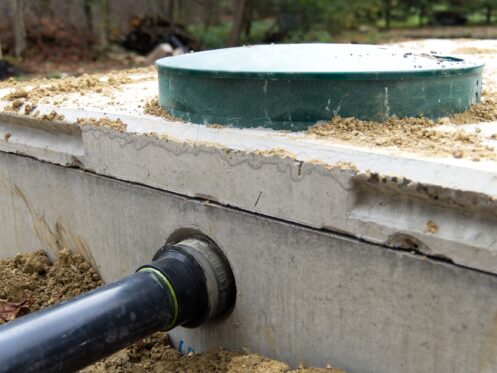
A conventional system relies on gravity and natural processes to treat wastewater. Wastewater flows from the home via a network of pipes into a large, watertight container made of concrete or plastic. This container is buried in the yard. Once wastewater enters the container, it separates into the following three layers:
- Solids
- Fats and oils
- Liquid effluent
The solids sink to the bottom, the liquid effluent stays in the middle, and the fats and oils rise to the top, creating a “scum” layer. This process takes time, and the septic tank’s main job is to keep the wastewater contained to complete the separation process and to break down the organic matter.
Once the waste has separated, the liquid effluent flows into the drainfield, also called the leach field. The drainfield consists of perforated pipes buried in gravel-filled trenches. When the effluent is released from the pipes into the soil, it undergoes a natural filtration process. Harmful pathogens and contaminants are removed by way of the aerobic bacteria in the soil.
Homeowners like installing septic systems that are conventional, because they require minimal maintenance outside of regular septic pumping, and they’re affordable. However, they have some drawbacks. They require precise site conditions, such as permeable soil and sufficient space for a sizable drainfield. Properties with clay-heavy soil or limited lot sizes need a different option.
Type 2: Sand Filter Systems
A sand filter system is a good choice when a conventional system isn’t a viable option. Instead of the liquid effluent being pumped into a drainfield, it’s pumped into a sand filter bed. The bed is constructed above or below ground. When the effluent reaches the sand bed, it’s distributed evenly across the surface.
The sand filters physical and biological substances. Fine grains trap solids and particles that have passed through, while providing a vast surface area for aerobic bacteria to colonize. The sand produces cleaner effluent that is then collected by an underdrain and subsequently dispersed into smaller drainfields for final soil absorption. Because the treatment level is so clean, homeowners near sensitive bodies of water often find sand filter systems reduce the risk of groundwater contamination.
Type 3: Drip Distribution Systems
Drip distribution systems are another alternative when the soil or lot size doesn’t allow for a traditional drainfield. What makes this system different is the specialized tubing that results in a slow, even, and consistent “drip” into the soil. The absorption rate is excellent with this system, and the wastewater is purified by the topsoil and any vegetation growing above it.
If you own a property that has shallow bedrock or a high water table, this is an ideal method that doesn’t require deep soil levels for treatment. It’s also an ideal setup for irregular-shaped or sloped sites because the tubing is flexible and laid to follow the shape of the land.
Maintenance and Care for All Systems
No matter which type of septic system you have, you must maintain it to ensure its longevity and efficiency. The number one maintenance task is septic pumping every 3-5 years to remove any buildup of solids. You also want to stay mindful about what you introduce into the plumbing system. Only use septic-approved toilet paper and avoid putting grease and harsh chemicals in drains.
When you have questions about your septic system, it’s important to hire local, certified septic professionals who understand the specific needs of properties in the Salina area. Contact LilyPad Septic today for septic installation, repair, or maintenance services.