How Does a Septic Tank Work?
If you own a home with a septic system, you may know it’s important—but not exactly how it does its job. A septic tank works as a private wastewater treatment system for homes that aren’t connected to a municipal sewer line. Wastewater from toilets, sinks, showers, laundry, and other drains flows into the tank, where solids separate from liquids before the clarified water moves on to the drain field for further treatment in the soil.
At LilyPad Septic, we help homeowners in Salina, Hutchinson, and surrounding Kansas communities understand their systems and keep them working the way they should. If you want help after reading this guide, you can learn more about our septic tank pumping service or check the areas we serve.
The Basic Parts of a Septic System
A standard septic system has two main parts: the septic tank and the drain field. In some systems, there may also be a pump tank or additional treatment components depending on site conditions and system design. The tank is the first stop, and the drain field is where the treated liquid is dispersed into the soil. For a closer look at each piece, see our guide to the components of a septic system.
How a Septic Tank Works, Step by Step
Step 1: Wastewater Leaves the House
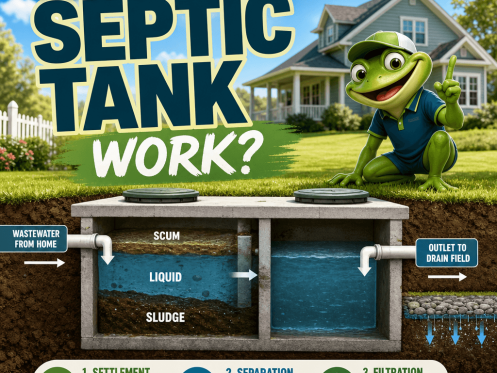
Every time you flush a toilet, run the sink, take a shower, or do laundry, wastewater travels through the home’s plumbing into the septic tank. The tank is underground and designed to hold the water long enough for separation to happen naturally.
Step 2: Solids Separate Inside the Tank
Once wastewater enters the tank, it separates into three layers:
- Scum floats to the top and includes oils, grease, and lighter materials.
- Effluent sits in the middle and is the clearer liquid layer.
- Sludge settles to the bottom and contains heavier solids.
Bacteria inside the tank help break down some of the waste, but not everything disappears. That’s why sludge builds up over time and eventually needs to be pumped out. Periodic pumping is the single best thing you can do to keep a septic system functioning properly.
Step 3: The Liquid Effluent Moves to the Drain Field
After separation, the liquid effluent flows out of the tank and into the drain field, where it filters through the soil. The soil helps finish the treatment process by naturally removing or reducing contaminants before the water returns to the environment.
This is one reason proper system design and maintenance matter so much. If too many solids escape the tank, or too much water is sent into the system at once, the drain field can become clogged or overloaded.
What Makes a Septic Tank Stop Working Properly?
Septic systems usually run quietly in the background, but problems start when the tank or drain field is overloaded or neglected. Common causes include:
- Excessive water use
- Long gaps between pump-outs
- Flushing non-biodegradable items
- Grease buildup
- Drain field damage or saturation
- Lack of routine inspections and maintenance
When a system isn’t maintained, solids can move into the drain field and cause backups, slow drains, odors, and expensive repairs. According to the U.S. Environmental Protection Agency’s guidance on how to care for your septic system, regular inspection and pumping is one of the four keys to keeping a system healthy.
How Often Should a Septic Tank Be Pumped?
There isn’t one exact schedule for every home, but regular pumping is essential. Most tanks need to be pumped every three to five years, though the right interval depends on your tank size, household size, water usage, and how much solid waste enters the system.
If you’re not sure whether your tank is due, we can help. Learn more about timing in our guide on how often a septic tank should be cleaned, or read up on how septic pumping works before you schedule service.
Signs Your Septic System May Need Attention
Watch for warning signs like:
- Slow drains throughout the house
- Gurgling plumbing
- Bad odors near drains or outside
- Wet spots or unusually green grass over the drain field
- Sewage backups in tubs, sinks, or toilets
If you notice any of these issues, it’s smart to schedule service quickly before the problem gets worse. When something goes wrong, our septic system repair team can diagnose and fix it before it becomes a bigger job.
Why Septic Maintenance Matters
A well-maintained septic system protects your home, your property, and the surrounding environment. Properly installed and maintained systems help safeguard public health and local water resources, which is especially important across rural central Kansas.
Routine care also helps extend the life of your system and reduce the risk of emergency repairs. LilyPad Septic provides septic pumping, repair, and ongoing maintenance support throughout the region.
Frequently Asked Questions
How long does a septic tank last? With regular pumping and proper care, a septic tank can last several decades. Neglect, heavy solids buildup, and drain field damage are what shorten a system’s life, which is why routine maintenance is so valuable.
What should you never flush into a septic system? Avoid flushing wipes (even “flushable” ones), grease, paper towels, feminine products, medications, and harsh chemicals. These can clog the system or kill the bacteria your tank needs to break down waste.
Can I use a garbage disposal with a septic system? You can, but heavy disposal use adds more solids to the tank and can mean more frequent pumping. Scraping food scraps into the trash instead helps reduce the load on your system.
Need Septic Help in Salina, Hutchinson, or Nearby Areas?
Now that you know how a septic tank works, the next step is keeping yours in good shape. Whether you need routine pumping, help troubleshooting a backup, or just want a professional to take a look, LilyPad Septic is here to help. Visit our service areas page to see where we work, or contact us to schedule service.
For more official homeowner guidance, you can also review the EPA’s overview of how septic systems work.