Installing a new septic system is one of the most significant investments you will make in your home or property. Whether you are building a new home in Salina, Hutchinson, or anywhere in Central Kansas, replacing an aging system, or upgrading an undersized tank, choosing the right septic contractor matters enormously. LilyPad Septic has the experience, equipment, and local knowledge to install your septic system correctly from day one.
A properly installed septic system will serve your home quietly and reliably for 20 to 40 years with routine maintenance. A poorly installed system can fail within a few years, causing environmental damage, property damage, and expensive remediation. That is why homeowners throughout Saline, Reno, McPherson, and surrounding counties trust LilyPad Septic for new septic installations.
What Is a Septic System and How Does It Work?
A septic system is a self-contained underground wastewater treatment system used by homes and businesses that are not connected to a municipal sewer line. It has two primary components: the septic tank and the drain field (also called a leach field or absorption field).
Wastewater from your home flows into the septic tank, where heavy solids settle to the bottom as sludge, lighter materials float to the top as scum, and the middle layer of relatively clear liquid (effluent) flows out to the drain field. In the drain field, the effluent percolates through the soil, which filters and treats it before it rejoins the groundwater supply.
When a septic system is properly designed and installed, this process happens automatically and continuously with no odor, no fuss, and no impact on your daily life. When a system is poorly designed or installed — or when it is not maintained — problems can develop quickly and become very costly to fix.
Types of Septic Systems We Install
LilyPad Septic installs multiple types of septic systems depending on your property’s soil conditions, lot size, water table depth, and local regulations. Not every property is suitable for every system type, which is why a proper site evaluation is always the first step in any new installation.
Conventional Gravity System
The most common type of residential septic system. Wastewater flows from the tank to the drain field by gravity. These systems are reliable, cost-effective, and work well in areas with suitable soil permeability and adequate separation from groundwater. If your soil perc test results are favorable, a conventional system is usually the most affordable option.
Pressure Distribution System
Used when the soil conditions are not ideal for a conventional gravity system. A pump distributes effluent evenly across the drain field, preventing any one area from becoming oversaturated. These systems are more complex than gravity systems but significantly extend the life of the drain field by distributing the hydraulic load evenly.
Mound System
Required in areas with high water tables, shallow bedrock, or low soil permeability. A raised mound of suitable fill material is constructed above ground level, and the drain field is built within it. Mound systems provide the necessary soil depth for proper treatment when natural conditions do not allow for a below-grade drain field.
Chamber System
An alternative to traditional gravel drain fields, chamber systems use plastic arch-shaped chambers that allow effluent to flow through and absorb into the surrounding soil. They are well-suited for areas with good soil absorption, have no gravel requirement, and are easier to install in certain site conditions.
Aerobic Treatment Unit (ATU)
A more advanced system that introduces oxygen into the treatment process, producing a higher-quality effluent than conventional systems. ATUs are often required in areas near bodies of water or in situations where strict environmental standards apply. They require more maintenance than conventional systems but allow installation in areas where other system types are not permitted.
The Septic Installation Process: What to Expect
Installing a septic system is a multi-step process that requires coordination with local health authorities, careful site evaluation, and skilled installation work. Here is an overview of what LilyPad Septic does on every new installation project:
Step 1: Site Evaluation and Soil Testing
Before anything is designed or permitted, we evaluate your property. This includes reviewing topography, proximity to wells and water features, lot size, and conducting a soil percolation (perc) test. The perc test determines how quickly your soil absorbs water, which directly determines what type of system is appropriate and how large the drain field needs to be. We work with certified soil evaluators to ensure accurate results.
Step 2: System Design
Based on the site evaluation, perc test results, your home’s expected water usage, and local code requirements, we design a septic system that is properly sized and appropriately placed for your property. Proper design is critical — an undersized system will fail prematurely, and a poorly located system may violate setback requirements from wells, property lines, or water features.
Step 3: Permit Application
LilyPad Septic handles the permit process with your county health department. In Kansas, septic systems must be designed and installed according to Kansas Department of Health and Environment (KDHE) regulations and local county codes. We prepare all required documentation and submit it on your behalf, so you do not have to navigate the permitting bureaucracy alone.
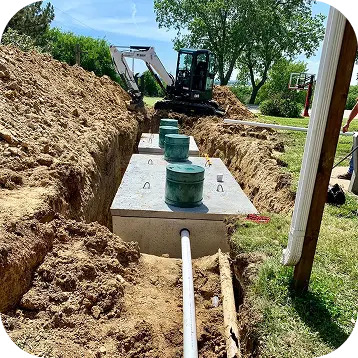
Step 4: Excavation and Installation
Once permits are approved, our crew mobilizes to your property with the equipment needed to excavate and install your system. We install the tank, connecting pipes, distribution box (if applicable), and drain field with precision. Our technicians follow the approved design plans exactly, ensuring the system is built to code and positioned correctly on your property.
Step 5: Inspection
Before backfilling, a county or state inspector typically visits the site to verify that the installation meets all regulatory requirements. LilyPad Septic coordinates the inspection schedule and makes sure everything is ready for approval before the inspector arrives.
Step 6: Backfill and Site Restoration
After the inspection is passed, we backfill the excavation and restore the site as close to its original condition as possible. We are respectful of your landscaping, lawn, and property and take care to minimize disruption.
Step 7: Documentation and Owner Education
We provide you with a complete set of documentation including the as-built diagram showing exactly where your tank and drain field are located, the inspection sign-off, permit records, and maintenance guidelines. We also walk you through how to care for your new system and what to avoid to maximize its lifespan.
Septic Tank Sizing: How Big Does Your Tank Need to Be?
Septic tank size is determined primarily by the number of bedrooms in your home, which is used as a proxy for the number of occupants and daily water usage. In Kansas, the minimum tank size for a standard residence is typically 1,000 gallons, but most modern homes require 1,250- or 1,500-gallon tanks, and larger homes may need multiple tanks or tanks in excess of 2,000 gallons.
Installing an undersized tank is a common mistake made by inexperienced contractors. An undersized tank does not allow enough time for solids to settle before effluent flows to the drain field, which leads to premature drain field failure. LilyPad Septic sizes every installation correctly based on your household’s actual needs — not the minimum the code allows.
How Much Does Septic System Installation Cost in Central Kansas?
The cost of a new septic system installation in Kansas varies widely depending on the system type, soil conditions, tank size, site accessibility, and permit fees. A straightforward conventional gravity system on a favorable site will cost less than a mound system or ATU on a challenging site with high groundwater.
Generally speaking, new septic installations in Central Kansas range from $6,000 to $20,000 or more depending on these variables. LilyPad Septic provides detailed, honest quotes that break down every component of the project so you know exactly what you are paying for. We never low-ball an estimate to win a bid and then surprise you with change orders — that is not how we do business.
We also offer financing options for new installations to help manage the upfront investment. Ask us about available payment plans when you request your quote.
Septic System Replacement: Signs Your System Has Failed
If your home already has a septic system that is struggling or has failed, LilyPad Septic can evaluate your current system and recommend the appropriate course of action. Sometimes a system can be repaired — a failed pump, a crushed pipe, a damaged baffle — without full replacement. Other times, especially when the drain field has become saturated and cannot recover, full replacement is the only option.
Signs that your existing system may have failed include:
- Persistent sewage odors in or around your home
- Wet, marshy areas over the drain field that do not dry out
- Sewage surfacing in the yard
- Toilets and drains that are perpetually slow or frequently back up
- Unusually green, lush grass over the drain field
- A septic tank that fills up again within days of being pumped
If you are experiencing any of these symptoms, call LilyPad Septic for an evaluation. The sooner a failing system is addressed, the lower the total cost of repair or replacement.
Frequently Asked Questions: Septic System Installation
How long does it take to install a new septic system?
The installation itself typically takes one to three days for a standard residential system. However, the overall timeline from initial site evaluation to completed installation can range from two weeks to two months depending on permit processing times, weather, and scheduling.
Do I need a permit to install a septic system in Kansas?
Yes. All new septic system installations in Kansas require permits from the local county health department and must comply with KDHE regulations. LilyPad Septic handles all permitting on your behalf.
How long will my new septic system last?
A properly installed and maintained septic system can last 25 to 40 years. The drain field typically has a shorter lifespan than the tank, often 20 to 30 years, depending on soil conditions and how well the system has been maintained.
Can I install a septic system myself?
In Kansas, septic systems must be installed by a licensed contractor. DIY installation is not permitted, and attempting it would void any permits and create serious liability issues. Beyond the legal requirement, proper installation requires specialized knowledge and equipment that most homeowners do not have.
What can I do to protect my new drain field?
Never drive vehicles over the drain field. Do not plant trees or shrubs with deep root systems near the drain field. Avoid putting excessive water into the system (repair leaky faucets, spread out laundry loads). Do not pour grease, chemicals, or non-biodegradable materials down your drains. Pump your septic tank on schedule to prevent solids from reaching the drain field.
Why Choose LilyPad Septic for Your New Installation?
LilyPad Septic has built its reputation in Central Kansas by doing quality work, being honest with customers, and standing behind every installation. Our team is fully licensed and insured, and we have the field experience to handle installations on all types of properties — from flat, accessible lots to challenging rural sites with difficult soil conditions or limited access.
We are not a national franchise or a company that treats every job as a number. We are a local business that serves the same communities where our employees and owners live. When you hire LilyPad Septic, you are working with people who take pride in the quality of their work and who understand that your septic system is a critical piece of infrastructure for your home and family.
From the initial site evaluation to the final inspection and beyond, we will be there to answer your questions, keep you informed, and make sure your new septic system is installed right the first time.
Schedule Your Septic Installation Consultation Today
Ready to get started? Contact LilyPad Septic today to schedule a site evaluation and receive a detailed installation quote. We serve Salina, Hutchinson, McPherson, Abilene, Newton, and all of Central Kansas. Our team responds quickly, and we will work with your timeline to get your project moving.
Call us or fill out our online form. LilyPad Septic — We’ll Be There in a Splash!