If you are seeing pooling water in your yard, sewage odors near your lawn, or slow drains that never seem to clear up, your drain field — also called a leach field or absorption field — may be failing. A failing drain field is one of the most serious and costly septic system problems a homeowner can face. At LilyPad Septic, we specialize in drain field diagnosis, repair, and full replacement throughout Central Kansas, including Salina, Hutchinson, McPherson, Newton, and the surrounding region.
Do not let a failing drain field turn into a full-scale environmental or health emergency. LilyPad Septic has the equipment, the expertise, and the local knowledge to restore your drainage system correctly and cost-effectively — the first time.
What Is a Drain Field and How Does It Work?
Your drain field is the final treatment zone in your septic system. After solids settle in the septic tank, clarified liquid effluent flows into a series of perforated pipes buried in gravel-filled trenches. From there, the effluent slowly percolates through the soil, where natural bacteria continue to treat it before it rejoins the groundwater table.
A properly functioning drain field is largely invisible. The grass above it might be slightly greener due to the nutrient-rich effluent, but there should be no odors, no wet spots, and no visible wastewater. When things go wrong, the signs are hard to miss.
Signs Your Drain Field Is Failing
Drain field failure rarely happens overnight. There are typically warning signs that appear weeks or months before the system reaches a complete failure point. Recognizing them early can save you thousands of dollars in repair costs.
- Wet, spongy, or soggy ground over the drain field area, even during dry weather
- Standing water or puddles in your yard near the drain field or septic tank
- Strong sewage odors outdoors near the absorption area or indoors near floor drains
- Slow drains throughout the house, particularly on the lowest floor
- Gurgling sounds from toilets and drains, especially after heavy water use
- Lush, bright green grass growing in a concentrated patch over the drain field trenches
- Sewage backup into toilets, tubs, or sinks — a sign of complete system failure
- High nitrate levels in nearby well water tests
If you are experiencing any of these symptoms, call LilyPad Septic at 785-268-2656 for a professional drain field assessment. We serve all of Central Kansas and offer 24/7 emergency response.
Common Causes of Drain Field Failure in Central Kansas
Understanding why drain fields fail helps homeowners make informed decisions about repair versus replacement. The most common causes we see throughout Saline, Reno, McPherson, and Harvey counties include:
1. Biomat Buildup
Over time, a thick biological layer called a biomat forms at the soil interface in the trenches. When a septic tank has not been pumped regularly or has been overloaded with solids, the biomat can grow thick enough to block water percolation entirely. In many cases, resting the field and reducing water use allows the biomat to break down naturally — but severely impacted systems may need excavation.
2. Hydraulic Overloading
When more water enters the septic system than the soil can absorb — due to excessive water use, heavy rainfall, or a high water table — the drain field becomes saturated. Kansas clay soils found in parts of Saline and Reno counties are particularly prone to this issue. Reducing household water use and, in some cases, adding drain field area can resolve the problem.
3. Pipe Collapse or Root Intrusion
Old clay or concrete distribution pipes can crack and collapse over time. Tree and shrub roots are attracted to the moisture in drain field trenches and will infiltrate pipes through even hairline cracks. Once roots enter the pipe, they grow rapidly and block effluent flow. Root intrusion is one of the most common repair issues we handle in Central Kansas.
4. Soil Compaction
Driving vehicles, parking heavy equipment, or even allowing livestock to roam over the drain field compresses the soil, eliminating the air pockets that allow the soil to absorb and treat effluent. Compacted soil almost never recovers — in these cases, the affected portion of the field typically needs to be excavated and replaced with fresh gravel and new pipe.
5. Design or Installation Problems
Some drain field failures in older Kansas homes stem from undersized or improperly designed systems. A field that was adequate for a single occupant may fail when a growing family moves in. If your system was installed before modern Kansas Department of Health and Environment (KDHE) standards were in place, it may need to be redesigned and expanded.
6. Septic Tank Issues Affecting the Field
A drain field problem is often actually a septic tank problem. If the septic tank has not been pumped in many years, solids can carry over into the drain field and clog the distribution pipes and soil. That is why every drain field assessment we perform includes an inspection of the septic tank as well.
Drain Field Repair Options
Not every failing drain field needs complete replacement. LilyPad Septic evaluates each situation carefully and recommends the most cost-effective solution. Our drain field repair options include:
Drain Field Aeration (Terralift / Air Injection)
For drain fields suffering from compaction or early biomat buildup, air injection therapy can restore soil permeability without excavation. We inject high-pressure air into the soil around the drain field trenches, fracturing compacted soil and breaking up biomat. This is one of the least invasive and most affordable options when appropriate.
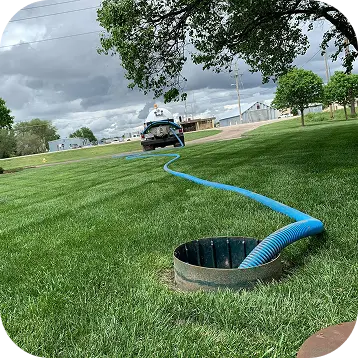
Septic Tank Pumping and Rest Period
In some cases, simply pumping the septic tank and giving the drain field a rest period — combined with strict water conservation — allows the biomat to naturally decompose. We may recommend this approach for lightly impacted fields before recommending excavation.
Distribution Box Replacement
The distribution box (D-box) divides effluent evenly between the drain field trenches. A cracked, tilted, or corroded distribution box can cause one section of the field to receive too much effluent while others receive too little, leading to localized failure. Replacing the D-box is a relatively low-cost repair that can restore balance to the system.
Partial Drain Field Repair
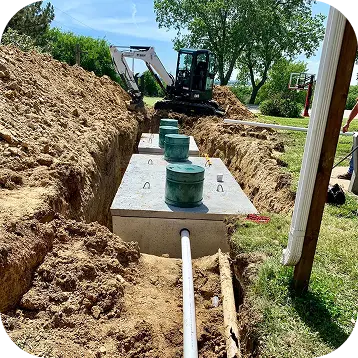
If only one or two trenches are failing, we can often excavate, clean, and replace just the damaged sections rather than the entire field. We remove the clogged gravel, replace it with fresh stone, and install new perforated pipe before backfilling and restoring the surface.
Full Drain Field Replacement
When the entire field has failed — due to severe biomat, widespread soil compaction, pipe collapse, or design inadequacy — full replacement is necessary. LilyPad Septic handles the complete process, from permit acquisition and soil testing to excavation, installation, and final inspection.
The LilyPad Septic Drain Field Repair Process
- Initial Inspection: We begin with a thorough system inspection — including tank pumping and inspection, distribution box check, and visual assessment of the drain field surface.
- Soil and Percolation Testing: For replacement projects, we perform soil testing to determine absorption rates and ensure the new system is properly sized for your property.
- KDHE Permit Coordination: We handle all required permits through the Kansas Department of Health and Environment and your local county health department.
- Excavation and Removal: Our excavation equipment carefully removes the old gravel, pipe, and any contaminated soil from the failed trench areas.
- New Field Installation: We install properly sized distribution pipes, fresh clean stone, and appropriate geotextile fabric per KDHE specifications.
- Inspection and Backfill: After the county inspector approves the installation, we backfill and grade the site.
- Final Walkthrough: We walk you through the completed project and provide maintenance recommendations to extend the life of your new field.
How Long Does a Drain Field Last?
A properly installed and maintained drain field in Central Kansas can last 25 to 30 years or longer. The key factors that determine longevity are:
- Regular septic tank pumping (every 3–5 years) to prevent solids carryover
- Avoiding heavy traffic or construction over the drain field area
- Conserving water to avoid hydraulic overloading
- Keeping deep-rooted trees and shrubs away from the field
- Avoiding disposal of grease, wipes, or harsh chemicals down the drain
Drain Field Repair Cost in Central Kansas
The cost of drain field repair in Central Kansas varies widely depending on the extent of the damage and the type of repair required:
- Distribution box replacement: $500–$1,500
- Partial trench repair (1–2 trenches): $1,500–$4,000
- Full drain field replacement (standard system): $5,000–$15,000+
- Aerobic Treatment Unit (ATU) alternative system: $8,000–$20,000+
Every situation is unique. LilyPad Septic provides free, no-obligation estimates after our initial inspection. We will explain your options clearly and help you make the most cost-effective decision for your home and budget.
Frequently Asked Questions: Drain Field Repair in Central Kansas
Can I repair my drain field myself?
Drain field repair requires a permit in Kansas and must be performed by a licensed contractor. Beyond the legal requirements, improper repairs can make the problem significantly worse and may contaminate groundwater. Contact LilyPad Septic for a professional evaluation.
How do I know if my drain field or my septic tank is the problem?
Both can produce similar symptoms — slow drains, gurgling, and wet spots. Our technicians perform a systematic inspection starting with the septic tank. If the tank is in good condition and properly pumped but the symptoms persist, the drain field is the likely culprit. We use probe testing and visual inspection to pinpoint the failure zone.
How long does drain field replacement take?
Most drain field replacement projects in Central Kansas take 1–3 days of work once permits are approved. Permit approval timelines vary by county but typically take 1–2 weeks. We expedite the permit process as much as possible to minimize your wait time.
Will my homeowner’s insurance cover drain field repair?
Most standard homeowner’s insurance policies do not cover drain field repair resulting from normal wear and failure. Some policies include limited coverage for sudden collapse or accidental damage. Check with your insurance agent and review your policy carefully.
Contact LilyPad Septic for Drain Field Services in Central Kansas
If you suspect your drain field is failing, do not wait for a complete system collapse. Early intervention almost always results in a less expensive and less disruptive repair. Call LilyPad Septic at 785-268-2656 to schedule your drain field inspection. We serve all of Central Kansas including Salina, Hutchinson, McPherson, Newton, Abilene, and the surrounding communities.
LilyPad Septic — We’ll Be There in a Splash!